HomeBlogBlogTravel Food Budget: Grocery Stops, Snacks & One Splurge

Travel Food Budget: Grocery Stops, Snacks & One Splurge

Travel Food Budget: Grocery Stops, Snacks & One Splurge

The Smart Way to Eat on the Road: Save Money on Food While Traveling

Eating well while traveling doesn’t have to mean constant fast food or overpriced airport meals. With a little planning and a few go-to strategies, it’s possible to keep daily food costs predictable, avoid waste, and still enjoy local treats without blowing the budget. The goal isn’t perfection—it’s setting up a simple system that travels with you, whether you’re flying cross-country, road-tripping for a weekend, or bouncing between hotels on a work schedule.

Set a daily food budget that actually works on travel days

A realistic food budget keeps “surprise” spending from sneaking into every stop. Start with one number you can stick to, then make it easy to follow in real time.

  • Split your daily total into buckets: breakfast, one main meal, snacks, and one flexible “treat” allowance. The treat can be coffee, dessert, a local pastry, or a highly rated spot you don’t want to miss.
  • Plan around high-cost zones: airports, attractions, stadiums, and downtown areas tend to inflate prices. Shift spending to low-cost moments (grocery breakfast, packed snacks, refillable water) so those expensive zones don’t blow your day.
  • Use a “two-out-of-three” rule: each day, pick two priorities—convenience, health, savings—then plan the third meal to balance it out. Example: a convenient airport lunch + healthy grocery snacks means dinner can be the budget-focused meal (simple kitchenette meal or split entrée).

Shop once, eat multiple times: the grocery stop strategy

A single intentional grocery stop early in your trip can replace multiple impulse buys. The key is choosing foods that can combine into several meals.

  • Make one early grocery run: grab breakfast staples, high-protein snacks, fruit, and one ready-to-eat meal (like a salad kit or rotisserie chicken) for the day you’re most tired.
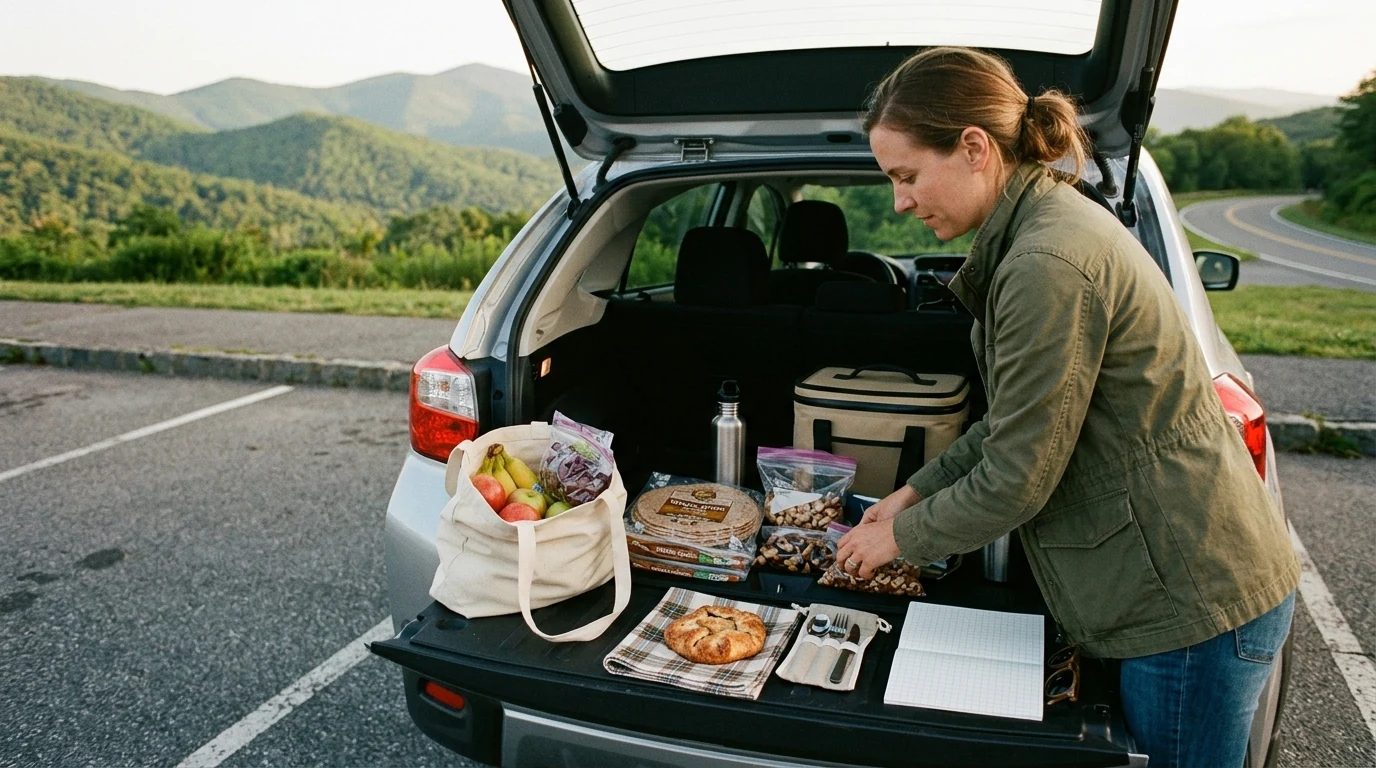
  • Prioritize travel-friendly items: bananas, apples, baby carrots, trail mix, shelf-stable tuna packets, whole-grain wraps, and yogurt if you have a fridge.
  • Buy mix-and-match components: wraps/bread + protein + veggies + sauce makes multiple meals for less than buying separate “single-serve” items.
  • Check your amenities first: mini-fridge, microwave, kitchenette, or even lobby hot water changes what makes sense to buy.

Typical cost per person: common travel meal choices

Option What it looks like Typical cost Best for
Convenience meal on the go Airport/food court combo meal + drink $15–$30 Tight connections, no prep time
Grocery breakfast Oatmeal + fruit + coffee/tea $2–$6 Budget-friendly mornings
Packed lunch Wrap/sandwich + fruit + snack $4–$10 Road trips, day tours, hiking
Casual local dinner Entrée + shared appetizer or dessert $15–$40 Enjoying local food without overspending
Hotel kitchenette dinner Simple skillet/pan meal or microwave bowl $5–$12 Multi-night stays

Pack a “portable pantry” for airports, trains, and road trips

Your portable pantry is your backup plan when delays hit, restaurants are overpriced, or options are limited. Aim for shelf-stable items that actually keep you full.

  • Choose staples that don’t spoil: nut butter packets, protein bars, instant oatmeal cups, jerky, crackers, and electrolyte packets.
  • Bring a reusable water bottle: refill after security. Drinks are one of the easiest budget leaks, especially in airports.
  • Add a lightweight utensil kit: spork, napkins, and a few zip bags for leftovers. (If you bring a small knife, keep it in checked luggage only.)
  • Prioritize satiety: protein + fiber helps prevent “I’ll just grab something quick” spending during long waits.

Use the “one local splurge” plan (and skip the rest)

Saving money doesn’t mean skipping local food. It means choosing it on purpose.

Stay flexible with simple meal formulas

For general balanced-meal guidance that’s easy to adapt on the go, the USDA MyPlate method can help you keep portions practical without overcomplicating travel eating.

Avoid common money traps while traveling

When you’re unsure about food and water safety in a new place, follow the CDC’s food and water safety guidance to reduce the risk of a trip-derailing stomach issue (which can be expensive in more ways than one).

A ready-to-use travel food plan

Digital guides to simplify eating (and decision-making) on the move

FAQ

How can food costs be reduced while traveling without skipping restaurants entirely?

Use a grocery breakfast and packed snacks to cover the “filler” meals, then choose one restaurant meal per day as the planned highlight. Share sides or dessert, and skip drink add-ons most of the time to keep the total predictable.

What are the best snacks to pack for flights and long drives?

Go with shelf-stable, high-satiety options like protein bars, nuts, jerky, nut-butter packets, crackers, dried fruit, and electrolyte packets. Pair them with a refillable water bottle so you’re not paying premium prices for drinks.

Is it worth stopping at a grocery store on a short trip?

Yes—if it replaces even one overpriced convenience meal, it usually pays for itself. Focus on ready-to-eat items like fruit, yogurt, wraps, and rotisserie chicken so you get the savings without adding prep time.

Was this article helpful?

Yes No
Leave a comment
Top

Shopping cart

×