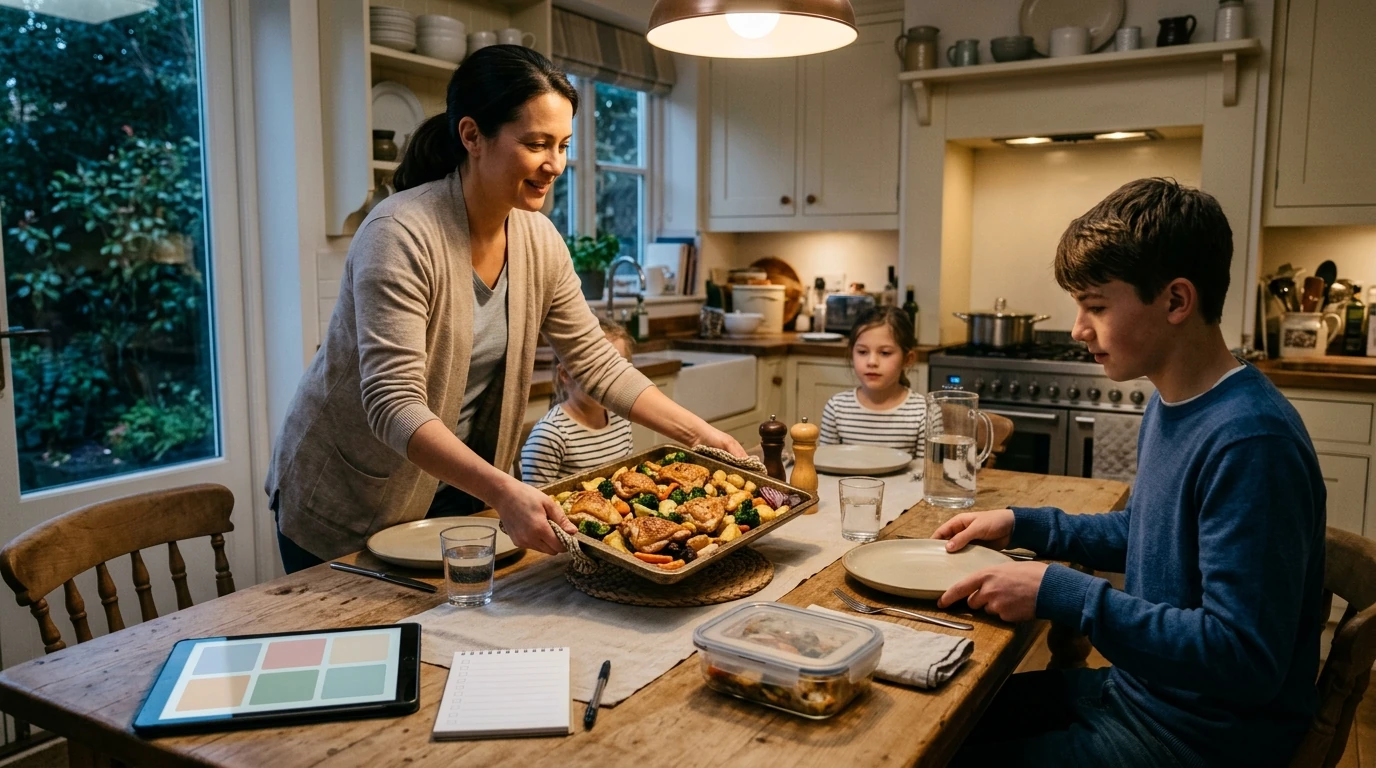
Evenings feel lighter when dinner decisions are already made. A calm, cozy dinner rhythm blends simple planning, repeatable prep, and family-friendly meals that don’t require constant new ideas. The goal isn’t perfection—it’s predictability: fewer last-minute pivots, fewer dishes, and a reliable “we’ve got this” routine that still tastes like comfort.
Calm and cozy doesn’t mean fancy; it means friction is removed before the day gets busy. Dinner choices are decided earlier (ideally once a week), so the evening isn’t spent scrolling recipes or making extra store runs.
That simple sequence is the real “cozy” ingredient: everyone knows what happens next, and the kitchen doesn’t take over the night.
A reusable dinner-week system works best when it’s both structured and flexible—clear enough to stop daily decision fatigue, but roomy enough to handle real life. Your Calm & Cozy Dinner Week Pack – 4-in-1 Digital Bundle is built around that balance: familiar meals, repeatable planning, and templates that keep everything in one place.
| Bundle piece | Helps with | Best time to use it |
|---|---|---|
| Weekly dinner plan | Eliminating daily decision fatigue | Weekend planning or Monday morning |
| Meal-planning framework | Keeping meals simple, cozy, and repeatable | When building a monthly rhythm |
| Family dinner structure | Making dinners work for different ages/preferences | Before grocery shopping |
| Checklists/templates | Reducing last-minute prep and forgotten items | During planning + daily prep |
Planning doesn’t have to be a “new week, new you” event. A calm dinner week is usually 20–30 minutes of choosing formats, assigning them to days, and writing a short prep list.
A helpful detail: assign your easiest meal to the day you’re most likely to be tired. Planning for energy—not ideal schedules—keeps the plan realistic.
Comfort food can still feel steady and nourishing when the “balance” is built into the structure, not extra effort. If you like a simple guide, USDA MyPlate and the Healthy Eating Plate both offer easy visual targets you can loosely aim for.
If emotions run high at dinnertime, it can help to pair practical planning with a calmer communication reset. EQ Mastery Bundle: Unlock Emotional Intelligence with 4 Digital Guides & Checklists can complement a dinner-week routine by supporting steadier routines and reactions when the day has been long.
If you already know you’re tired of reinventing dinner every day, a reusable bundle like Your Calm & Cozy Dinner Week Pack – 4-in-1 Digital Bundle is most valuable when you treat it as a system you repeat—then refine.
Optional add-on: if wellness goals are part of your household rhythm, Skin-First Nutrition Bundle | Healthy Skin Diet Guides & eBooks for Clear, Radiant Glow can be a separate, helpful guide for food choices—while the dinner-week system keeps execution simple.
Most households save about 1–3 hours per week through fewer store runs, faster decisions, and planned leftovers. The time savings typically grows after a few weeks, once the grocery list and prep habits become routine.
Yes—templates work better than rigid recipes. Keep components separate (protein, grain, veggies) and use add-ons like sauces or toppings so each person can customize without changing the core meal.
Slide meals to later days, use a pantry/freezer backup, and protect one “leftovers” night so food doesn’t go to waste. Keeping two emergency dinners on hand (like pasta + jarred sauce or eggs + toast) prevents stress when plans change.













Leave a comment